SpotiFLAC NEXT v.1.3.0 Dev Edition for Windows & Best FLAC Downloader for Spotify
by Ali Haider · May 19, 2026
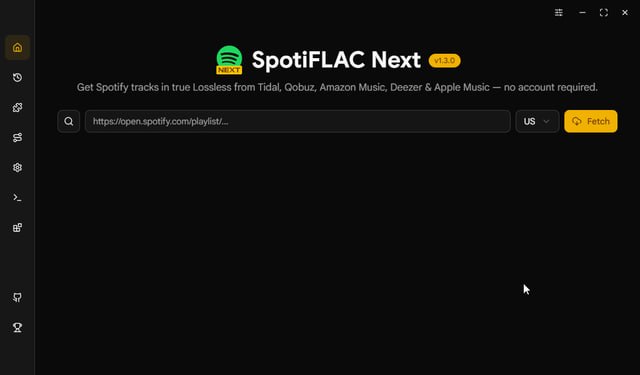
Table of Contents
ToggleSummary
SpotiFLAC NEXT is a specialized Windows application designed to download high-quality FLAC audio from Spotify. Unlike standard Spotify downloaders that cap quality at 320kbps MP3, SpotiFLAC NEXT focuses on lossless FLAC format, preserving the original audio quality for audiophiles, DJs, and music archivists.
Before installing, ensure your Windows system meets the requirements. SpotiFLAC NEXT runs on Windows 10 and Windows 11 (64-bit only). You will need a stable internet connection and an active Spotify account (free or premium works, but premium is recommended for higher bitrate sources).
Download and Installation
Download the installer from the official SpotiFLAC website. The Dev Edition includes experimental features not available in the standard release. Run the installer as Administrator. The installation process takes approximately 2-3 minutes. You do not need to uninstall previous versions the installer handles upgrades automatically.
First Launch
When you first launch SpotiFLAC, you will see a login screen. Enter your Spotify credentials. The application uses Spotify’s official API for metadata and search, but downloads audio through alternative sources. Your credentials are stored locally and not shared with any third party.
After login, the application will verify your account and load your playlists, liked songs, and saved albums. This initial sync may take 30-60 seconds depending on library size.
Understanding The Dashboard
SpotiFLAC NEXT has a clean, three-panel interface designed for efficient workflow.
Left Panel — Library Navigation: This panel shows your Spotify library: Playlists, Liked Songs, Albums, Artists, and Search. Click any item to view its contents in the center panel. The Dev Edition includes additional tabs for Download Queue and History.
Center Panel — Content Display: When you select a playlist or album, this panel shows all tracks. Each row displays track name, artist, album, duration, and a status icon indicating whether the track has been downloaded. You can sort by any column. Multiple selection (Ctrl+Click, Shift+Click) is supported for batch operations.
Right Panel — Download Settings: This panel appears when you select tracks or click the settings gear icon. Here you set the output format (FLAC is default; MP3, AAC, and WAV are also available), output folder location, file naming convention, and quality preferences.
Status Bar: At the bottom of the window, the status bar shows download progress, queue count, and active connection status. The Dev Edition includes a real-time bandwidth monitor.
Creating First Project
Unlike traditional software, SpotiFLAC does not use “projects.” Instead, you work directly with Spotify content.
Step 1: Authenticate and Sync
Launch SpotiFLAC NEXT. Log in with your Spotify credentials. Wait for the initial sync to complete. Your playlists appear in the left panel.
Step 2: Select Content
Navigate to a playlist you want to download. Click on the playlist name. All tracks appear in the center panel.
Step 3: Configure Download Settings
Click the settings gear icon in the right panel. Set the output folder to a location with sufficient storage (FLAC files are large — approximately 30-50MB per 3-4 minute track). Choose file naming convention: {track_number} - {track_name} is recommended for albums. Select FLAC as the output format. The Dev Edition offers a “Force FLAC” option that attempts lossless extraction even when the source is limited.
Step 4: Start Download
Select tracks in the center panel (Ctrl+A selects all). Click the Download button in the toolbar. The tracks move to the Download Queue in the left panel.
Step 5: Monitor Progress
The status bar shows overall progress. Each track shows individual status: Queued, Downloading, Processing, Completed, or Failed. Completed tracks appear in your specified output folder with the configured naming convention.
Common Workflow Steps
1. Downloading a Single Playlist
Select the playlist in the left panel. Click the Select All button (or press Ctrl+A). Click Download. SpotiFLAC processes the playlist sequentially. A 50-track playlist typically takes 15-30 minutes depending on source availability and internet speed.
2. Downloading Liked Songs
Click Liked Songs in the left panel. This loads all liked tracks (Spotify limits API access to the most recent 10,000). Select tracks or select all. Download. Liked songs download to a folder named “Liked Songs” with individual FLAC files.
3. Searching for Specific Tracks
Use the Search tab in the left panel. Enter artist name, track name, or album name. Results appear in the center panel. Select the correct match. Download as a single track or add to a custom batch.
4. Batch Operations
Hold Ctrl and click individual tracks to select multiple non-contiguous tracks. Hold Shift and click to select a range. Right-click selected tracks for context menu options: Download Selected, Add to Queue, Copy Track Info, or Open in Spotify.
Exporting Files
SpotiFLAC NEXT exports FLAC files directly to your specified output folder. There is no separate export step — files are written immediately upon completion.
File Naming Convention
Configure naming in Settings. Available variables include:
-
{track_number}: Track number from album -
{track_name}: Track title -
{artist}: Primary artist name -
{album}: Album name -
{year}: Release year -
{genre}: Primary genre
Example: {track_number} - {track_name} produces “01 – Song Title.flac.”
Organizing Output
For albums, SpotiFLAC NEXT can automatically create subfolders. Enable “Create album folder” in Settings. The structure becomes OutputFolder/AlbumName/Track Files.
Metadata Embedding
FLAC files include embedded metadata: track title, artist, album, year, genre, cover art, track number, total tracks, disc number, and composer. This metadata is read by any FLAC-compatible player (VLC, Foobar2000, Plex, Roon).
Troubleshooting
“Source Not Available” Error
This occurs when Spotify cannot provide the track in FLAC quality. The Dev Edition includes alternative source fallback. Enable “Use alternative sources” in Dev Settings. Some tracks may still be unavailable; these will be skipped with a warning.
Slow Download Speeds
SpotiFLAC NEXT downloads sequentially by default to avoid triggering rate limiting. To increase speed, enable “Parallel Downloads” in Dev Settings (limit to 3-5 concurrent downloads to avoid IP blocking). Note that parallel downloads may increase failure rates.
Authentication Failed
Spotify occasionally changes API authentication. If login fails, close the application, delete the credentials cache folder (%AppData%\SpotiFLAC\cache), and restart. Re-enter credentials.
Incomplete or Corrupt Files
Some downloads may complete but produce unplayable files. This is usually due to source interruption. Right-click the failed track in the History tab, select “Retry Failed.” The Dev Edition automatically retries failed downloads once.
“FLAC Not Available” Warning
Not all Spotify tracks have FLAC sources. The application will warn you before downloading tracks where lossless quality is unavailable. You can proceed with MP3 download (configured quality) or skip.
Productivity Tips
- Use Playlists as Batch Lists: Create a Spotify playlist named “To Download.” Add tracks to this playlist from any device. In SpotiFLAC, open that playlist and download everything at once. This is faster than searching for tracks individually.
- Schedule Downloads for Off-Peak Hours: Run large downloads overnight. The Dev Edition includes a scheduler. Set the application to start downloads at 2:00 AM and stop at 8:00 AM. This avoids daytime bandwidth contention.
- Monitor Disk Space: FLAC files consume significant storage. A typical album (10-15 tracks) uses 400-700MB. A large playlist (500 tracks) uses 15-25GB. Configure the application to pause downloads when free disk space falls below a threshold (default 10GB).
- Use History for Re-downloads: The History tab shows all previously downloaded tracks. If you lose files, right-click any track in History and select “Re-download.” The application remembers the original source and quality settings.
- Export Playlist as M3U: After downloading a playlist, generate an M3U playlist file. Right-click the playlist in the left panel, select “Export as M3U.” This creates a file that any media player can read, preserving track order.
Best Companion Tools
MediaMonkey or MusicBee are excellent for managing large FLAC libraries after download. Both support FLAC, handle metadata editing, and can organize files by artist/album.
foobar2000 is the audiophile’s choice for FLAC playback. It handles large libraries efficiently and supports DSP plugins for equalization.
Plex or Jellyfin can stream your downloaded FLAC library to any device. Set your output folder as a music library. Plex transcodes FLAC to MP3 for remote mobile streaming while preserving FLAC for local playback.
MP3tag is useful for batch metadata editing. SpotiFLAC already embeds metadata, but MP3tag allows you to add custom fields, high-resolution cover art, and lyrics.
TunePat Spotify Converter is an alternative if SpotiFLAC fails on specific tracks. It supports FLAC output but has lower success rates on newer Spotify DRM.
Conclusion
SpotiFLAC NEXT v.1.3.0 Dev Edition is the most capable tool for downloading FLAC-quality audio from Spotify. The Dev Edition’s experimental features, alternative source fallback, parallel downloads, and scheduler make it superior to standard release versions.
The application is not for casual users. FLAC files are large, downloads take time, and some tracks may not be available in lossless quality. For audiophiles, DJs, and music archivists who demand the highest quality, SpotiFLAC delivers what other tools cannot.
The Dev Edition receives frequent updates. Enable automatic updates to stay current with Spotify API changes. For critical music archives, maintain backups of your downloaded FLAC files. Rebuilding a large library is time-consuming.