OLI Systems 2010 – Analyzer 3.1.3 + ScaleChem 4.0.3 Complete Best Oilfield Scale Prediction Guide
Summary
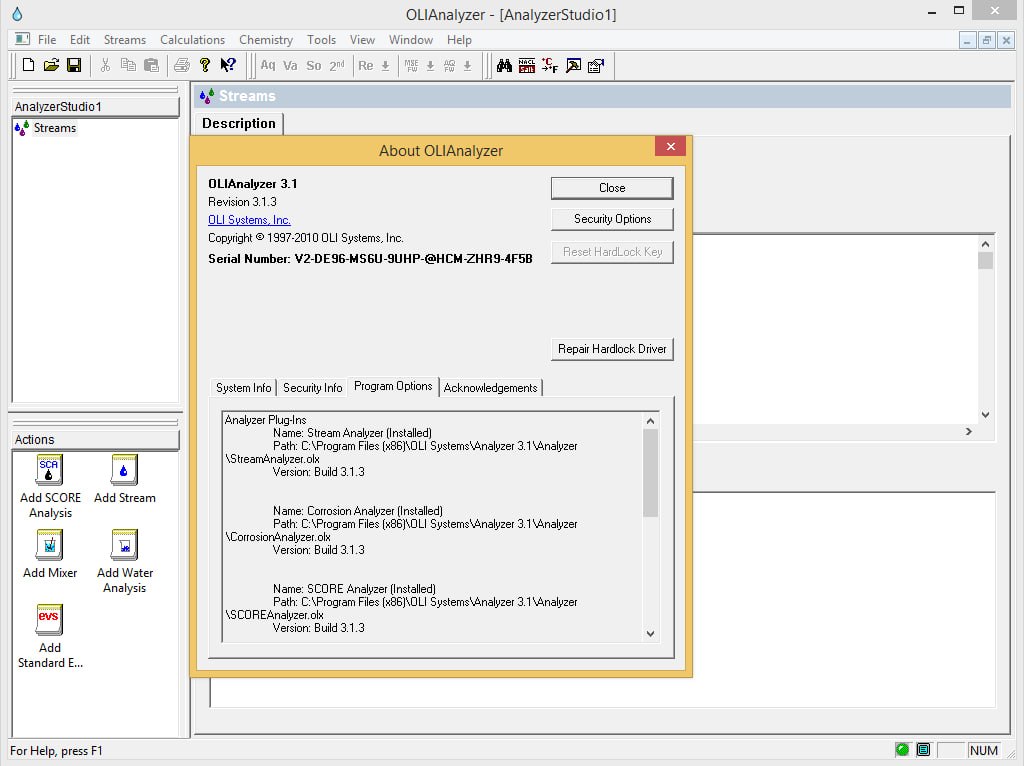
OLI Systems 2010 software bundle is a legacy electrolyte thermodynamic and mineral scaling prediction suite. It includes Stream Analyzer v3.1.3 and ScaleChem v4.0.3. It helped oilfield and geothermal engineers calculate mineral scaling tendencies and analyze complex water chemistries. The bundle used OLI’s extensive thermodynamic database built over 40 years. It was the industry standard for scale prediction at the time. The software was designed to predict formation of conventional and exotic inorganic scales across wide operating conditions. It integrated gas, oil, water, and solid material balance in every calculation from reservoir conditions to water re-injection and disposal.
The Challenge Facing Oilfield And Geothermal Engineers
Oilfield and geothermal engineers face a persistent problem. Mineral scale formation. Scale is solid material that precipitates from water. It forms inside pipes, valves, pumps, and wells. The most common scales are calcium carbonate, barium sulfate, and strontium sulfate. Scale reduces flow rates. It blocks equipment. It causes production downtime. Remediation costs millions of dollars annually.
Predicting scale formation is essential. If you know where scale will form, you can prevent it. You can inject scale inhibitors. You can adjust operating conditions. You can design facilities to handle scale. Scale prediction software like OLI Analyzer and ScaleChem provides this capability. It calculates the thermodynamic conditions under which scale forms. It helps engineers make informed decisions.
OLI Analyzer 3.1.3 – The Thermodynamic Calculation Engine
OLI Analyzer 3.1.3 was OLI’s primary gateway to electrolyte thermodynamics. It was built for single-point equilibrium calculations. Engineers used it to calculate pH, species distribution, and saturation indices. It also performed multi-point survey calculations. These tracked how parameters changed over time. Temperature, pressure, pH, and composition could be varied. The results showed when scale would precipitate. The software used the AQ (aqueous) and MSE (Mixed Solvent Electrolyte) frameworks. These frameworks represented the thermodynamic behavior of electrolyte solutions. The extensive database included thousands of species and reactions. Analyzer was the foundation for all OLI scale prediction work.
OLI ScaleChem 4.0.3 – Mineral Scaling Prediction Software
OLI ScaleChem 4.0.3 was designed specifically for mineral scaling potential quantification. It was used in oil and gas and geothermal operations. The software featured mixing capabilities for reservoir and production waters. Engineers could mix different water types. This was important because incompatible waters cause scale. The software calculated precipitation points based on phase partitioning. It identified the temperature and pressure at which scale would form. It predicted the mass of scale that would precipitate. ScaleChem combined advanced thermodynamic models for electrolytes and scale inhibitors. It also included innovative approaches to model scale formation kinetics. Classical nucleation theory was used to calculate scale induction times.
Aqueous And Mixed Solvent Electrolyte Models
The OLI software used two primary thermodynamic frameworks. The AQ (Aqueous) framework was for dilute to moderate electrolyte solutions. It was suitable for most oilfield waters. The MSE (Mixed Solvent Electrolyte) framework was for more complex systems. It handled mixed solvents like MEG and methanol. It was suitable for high temperature and high pressure conditions. Both frameworks were based on first principles. They represented the fundamental thermodynamics of electrolyte solutions. The frameworks were validated against extensive experimental data. The database included parameters for thousands of species. This allowed accurate predictions across a wide range of conditions.
Key Capabilities Of The OLI 2010 Software Bundle
The OLI Systems 2010 bundle offered several key capabilities for engineers. Scale prediction was the primary function. It predicted formation of conventional and exotic inorganic scales. Extensive thermodynamic database supported accurate predictions. Automated material balancing was included. Gas, oil, water, and solid material balance was rigorously included in every calculation. This made the software reliable.
H2S partitioning calculations tracked and managed H2S concentrations. This was important for safety and integrity. MEG and methanol modeling allowed scale formation prediction with MEG and methanol inclusion. Contour diagrams could be automatically generated. Temperature and pressure contours showed scale potential changes. The software generated reports that helped engineers optimize operations.
OLI Studio And Current Alternatives
The OLI Systems 2010 release is obsolete. OLI Systems has introduced more powerful modern software suites. For up to date scale prediction, assays, and corrosion modeling, the current platform is OLI Studio. OLI Studio includes dedicated modules for both Stream Analyzer and ScaleChem. OLI Studio: Stream Analyzer provides comprehensive electrochemistry research. It offers equilibrium calculations for single points, surveys, mixing, and separation analyses. OLI Studio: ScaleChem provides advanced scale prediction.
It features an intuitive interface designed for quick and reliable results. The modern software enhances operational efficiency and reduces risks. Users can automate scale risk assessments in near real time. They can automatically load water chemistry, well temperature and pressure, rates, and relevant information. Results are available in convenient online dashboards.
ScaleChem In Oil And Gas Operations
ScaleChem is used in oil and gas operations worldwide. Engineers use it to calculate scale risk profiles. These profiles go from reservoir to water injection or disposal. They identify critical scale risk points. This helps optimize chemical treatment. The software auto-generates scale contours for a range of temperature and pressure. Engineers can quickly see how scale risk varies from current conditions.
Both MEG and methanol systems are covered. Facilities modeling is another application. ScaleChem models topside facilities. It checks scale risk in surface equipment. Advanced features determine H2S partitioning in oil, gas, and water phases. This enables checking against material and safety limits. The software is trusted by major oil and gas companies. It helps them reduce downtime, prevent equipment failure, and improve production efficiency.
Advanced Features In Modern ScaleChem Software
Modern ScaleChem software includes advanced features beyond the 2010 version. Kinetic modeling is a key feature. Classical nucleation theory is used to include the kinetics of scale formation. Scale induction times can be calculated. This helps engineers understand when scale will appear. Scale inhibitors can be modeled. The impact of inhibitors on precipitation kinetics is calculated.
Users can choose pre-selected inhibitors or add their own. Custom data can be added to private databases. Users can tune models to experimental results. Online automation is another advanced feature. Scale risk assessments can be automated in near real time. Data is automatically loaded. Results are available in convenient reports. Expert technical support is available from OLI industry experts. This helps with complex scaling challenges.
Why Scale Prediction Software Matters For Production Efficiency
Scale prediction software is essential for production efficiency. Scale causes production losses. It blocks pipes and equipment. It reduces flow rates. It requires costly remediation. Scale prediction helps prevent these problems. Engineers identify where and when scale will form. They take preventive action. They inject scale inhibitors. They adjust operating conditions. They design facilities to handle scale. The result is higher production, lower costs, and reduced downtime. Companies that use scale prediction software have a competitive advantage. They produce more oil and gas at lower cost. They operate more safely and reliably. Scale prediction is not an option. It is a necessity for modern oil and gas operations.
Frequently Asked Questions
Q1: What is OLI Systems 2010 Analyzer 3.1.3 + ScaleChem 4.0.3?
It is a legacy electrolyte thermodynamic and mineral scaling prediction suite for oilfield and geothermal engineers, released in January 2010.
Q2: What is OLI Analyzer 3.1.3 used for?
It is used for single-point equilibrium calculations and multi-point survey calculations tracking temperature, pressure, pH, and composition changes.
Q3: What is OLI ScaleChem 4.0.3 used for?
It is designed specifically to quantify mineral scaling potential in oil and gas operations through mixing capabilities and precipitation point calculations.
Q4: What thermodynamic frameworks does OLI software use?
It uses the AQ (Aqueous) and MSE (Mixed Solvent Electrolyte) frameworks alongside OLI’s extensive database.
Q5: Is the 2010 version still current?
No. The 2010 version is obsolete. OLI Systems now offers OLI Studio with dedicated modules for Stream Analyzer and ScaleChem.
Q6: What is OLI Studio ScaleChem?
It is the modern scale prediction software from OLI Systems with an intuitive interface, kinetic modeling, and online automation capabilities.
Q7: How does ScaleChem help oilfield operations?
It calculates scale risk profiles, identifies critical scale points, and helps optimize chemical treatment to prevent scale formation.
Q8: Can ScaleChem model scale inhibitors?
Yes. ScaleChem models the impact of scale inhibitors on precipitation kinetics and allows custom inhibitor data.
Q9: What is online automation in ScaleChem?
It automates scale risk assessments by automatically loading water chemistry, well data, and generating convenient online reports.