Revolutio CHECKWIND v.8.4.2 (Advanced Site-Specific Wind Analysis Software) Download
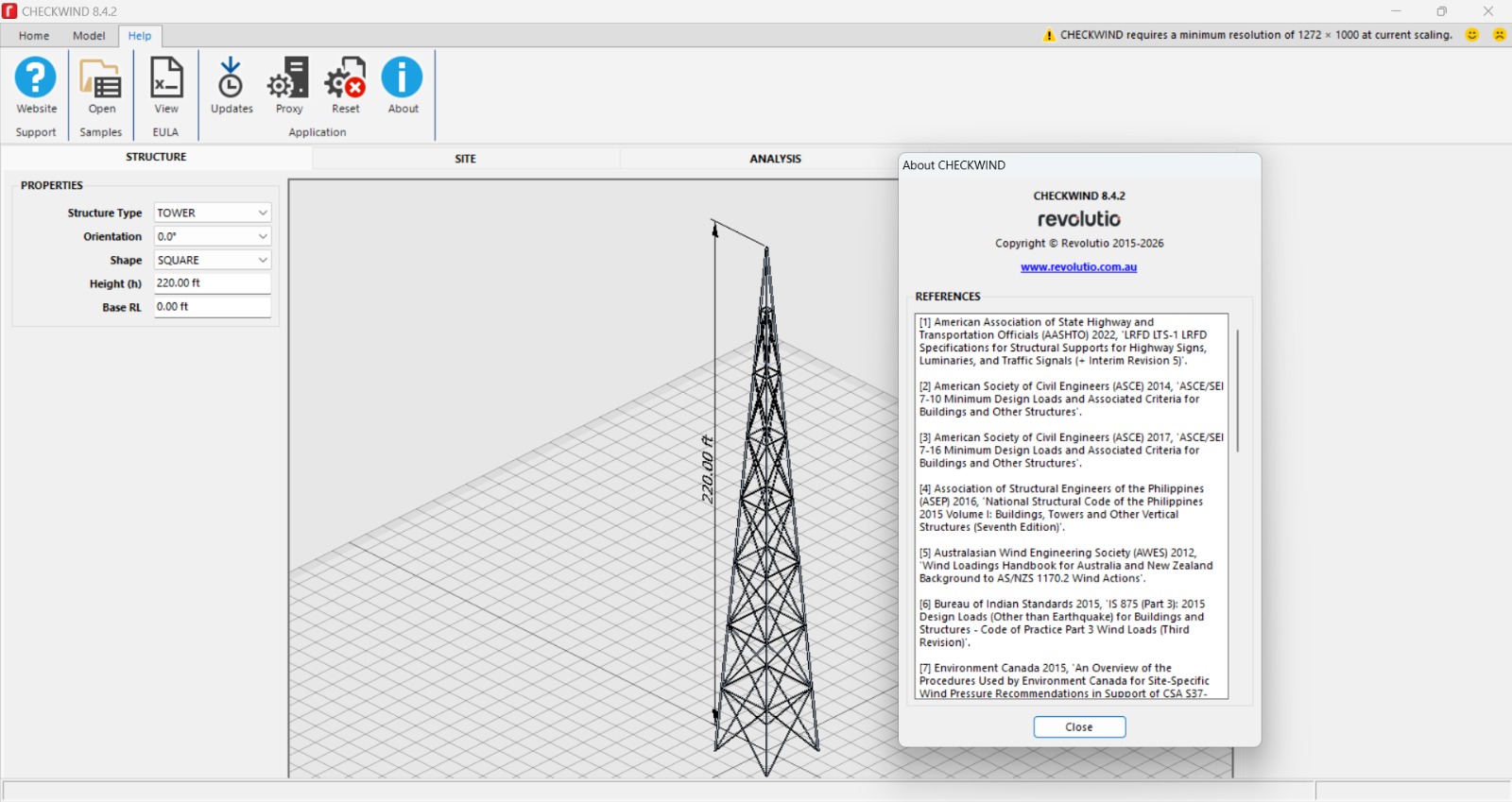
Download the Revolutio CHECKWIND v.8.4.2 (Advanced Site-Specific Wind Analysis Software) from this link…

Summary
CHECKWIND is a professional wind analysis and Structural Software developed by Revolutio that provides site-specific wind load calculations for engineering design projects. It is widely used by structural engineers, designers, and construction professionals to determine wind pressures, terrain effects, and directional factors at precise locations anywhere in the world.
By integrating mapping tools such as Google Maps and automated hazard databases, CHECKWIND enables users to generate accurate wind load parameters that conform to global design codes and standards. This software simplifies the complex process of wind load derivation for structures, making wind response analysis faster and more reliable for modern design workflows.
Purpose and Engineering Context
The primary purpose of CHECKWIND is to automate the calculation of wind load parameters for specific sites and to support design compliance with international codes. Wind analysis is an important part of structural design, affecting how buildings, poles, towers, and other structures must be engineered to withstand climatic forces. CHECKWIND eliminates the need for manual lookup of wind speeds or rough terrain factors by fetching and calculating these values quickly based on location, topography, and code requirements. With its automated tools, engineers save significant time and reduce the risk of error during design preparation.
Integration With Design Standards and Codes
It supports a broad range of internationally recognized wind design standards, ensuring its calculations are valid across different regions and jurisdictions. These include Australian standards like AS 4055 and AS/NZS 1170.2, American standards such as ASCE 7-10/16/22, Canadian code CSA S37-18, European standards EN 1991 and EN 40, Indian standards IS 875, and others such as TIA-222-H/I for telecommunications structures. These comprehensive standards support help engineers apply code-consistent wind pressures whether they are designing for local, regional, or global projects.
Automated Site-Specific Wind Calculations
One of the defining features of CHECKWIND is its automatic wind load generation based on precise site information. Users can enter an address or geographic coordinate, and the software uses mapping data and terrain classification logic to calculate wind region, exposure categories, shielding factors, and topographic multipliers, all of which influence how wind forces act on a structure. These calculations are essential for creating safe and compliant designs because wind loads vary significantly with terrain features and directionality.
Use of External Data Sources and Mapping Tools
Its advanced analysis engine uses external data sources, including Google Maps and other geographic services, to determine terrain categories, shielding effects, and directional topography. Additionally, for codes such as ASCE 7, the software retrieves basic wind speed values directly from the ASCE Hazard Tool, ensuring that the most current hazard data feeds into site calculations. This integration reduces the burden of manual data entry and improves the accuracy of the wind load predictions used in structural design.
Terrain and Shielding Classification
Accurately classifying terrain and shielding conditions is critical for precise wind analysis because the roughness of the surrounding landscape and nearby structures significantly influences wind pressures. It uses machine learning and mapping techniques to detect terrain categories, directional shielding classes, and topographic features, then applies these factors to design wind calculation methods. By automating these classifications, the software prevents common manual errors and boosts confidence in the resulting load values that will be used in structural design models.
Directional Analysis and Wind Multipliers
Wind loads are not uniform in all directions, and structures must be assessed for the effects of wind coming from multiple orientations. It calculates directional multipliers such as velocity pressure coefficients, terrain multipliers, topographic factors, and shielding multipliers for different compass directions, which help refine the design wind pressures for any given site. Such directional assessments are vital for structures like tall buildings, transmission towers, and sign supports where wind effects vary widely based on orientation.
Comprehensive Site Reports and Documentation
After performing wind load calculations, it produces detailed site reports and wind parameter summaries that can be exported and integrated into project documentation. These reports include wind speeds, terrain data, directional pressure coefficients, satellite image overlays, and other key details that engineers require for structural analysis reports, compliance verification, and client deliverables. Professional reporting helps ensure that designs are well documented and defensible during reviews or regulatory submissions.
Global Usage and Standard Support
It is trusted by structural professionals and engineering firms worldwide, spanning regions including Oceania, North America, Europe, Asia, Africa, and South America. Its support of diverse design codes makes it suitable for global projects, ensuring that whether an engineer is in Australia applying AS/NZS standards or in the United States using ASCE codes, the software provides relevant wind load calculations based on recognized benchmarks. This flexibility helps organizations maintain consistent and compliant design practices across international portfolios.
Version Updates and Continuous Development
Revolutio maintains CHECKWIND through ongoing version improvements that introduce new standards, enhanced calculation logic, and expanded terrain and directional analysis capabilities. Recent releases have brought automated wind speed sourcing for additional regional standards and finer control over topographic factors, helping engineers keep pace with evolving code requirements and project demands. This continuous development reflects a commitment to delivering reliable, modern tools for wind load assessment in structural applications.
Role in Modern Structural Engineering Practice
In modern structural engineering, accurate wind load analysis is essential for ensuring that buildings, towers, and other structures can safely withstand environmental forces. Software like it streamlines this process by providing automated, site-specific wind assessments that feed directly into design workflows. Its ability to handle multiple codes, integrate mapping data, and produce professional documentation helps engineers focus on design quality, reduce manual effort, and support compliance with international structural standards.
Our Paid Service
If you want to Purchase Cracked Version / KeyGen Activator /License Key
Contact Us on our Telegram ID :
Join Us For Update Telegram Group :
Join Us For Update WhatsApp group:
Crack Software Policies & Rules:
Lifetime Activation, Unlimited PCs/Users,
You Can test through AnyDesk before Buying,
And When You Are Satisfied, Then Buy it.