BIMware MASTER EC7 Foundations v.15.2.0 Download Geotechnical Design
Download the BIMware MASTER EC7 Foundations v.15.2.0 Geotechnical Design from this link…

Summary
BIMware MASTER EC7 Foundations is specialized engineering software that helps Civil and structural engineers analyze and design shallow foundation systems such as spread footings and strip footings resting on layered soil. This tool is built for detailed geotechnical work that follows the rules and procedures outlined in Eurocode 7 (EN 1997‑1), the European standard for geotechnical design. The software lets engineers quickly assess soil performance, foundation behaviour, and reinforcement needs in a reliable digital environment.
Designing foundations involves understanding how loads from the structure are transferred safely into the ground below. In many construction projects, footings must carry heavy loads without causing excessive settlement, sliding, or overturning. MASTER EC7 Foundations addresses these challenges by helping engineers model load paths and soil responses accurately. The software also supports national annexes from countries such as France, the United Kingdom, Poland, Denmark, Finland, and Bulgaria, which allows it to reflect regional geotechnical practices.
Calculations Based on EN 1997‑1 Guidelines
At the heart of EC7 Foundations is adherence to the Eurocode 7 standard (EN 1997‑1), which defines how geotechnical engineers should approach foundation design across Europe. This means that all structural checks, such as soil bearing capacity, settlement, erosion, and reinforcement verification are done according to recognized engineering principles. Eurocode 7 uses limit‑state design concepts to ensure safety and serviceability by applying partial safety factors to loads and soil properties during analysis.
Soil Capacity and Foundation Behaviour
The software performs a complete verification of soil capacity for layered ground conditions. Engineers can model multi‑layered soil profiles, including the presence of groundwater, to assess how soil will react under foundation loads. This includes checking whether the soil has enough strength to resist bearing pressures and whether foundation elements might experience excessive stress or displacements under load.
Modelling Spread and Strip Footings
It supports a variety of shallow foundation types used in construction. These include pad (isolated) foundations under single or paired columns and strip (continuous) foundations used for walls or closely spaced loads. Each foundation type can be defined with different geometric shapes such as rectangular, trapezoidal, stepped, and even circular configurations, allowing engineers to model real‑world foundation layouts accurately.
Load Application and Soil Interaction
Once the footing geometry is defined, engineers can assign design loads individually or create a list of load combinations that reflect typical service and ultimate conditions. The software also allows importation of load forces from external structural tools such as Autodesk Robot Structural Analysis, helping integrate foundation design with broader structural workflows. Once loads are applied, the program assesses how forces distribute through soil layers and evaluates stress concentrations at critical points such as foundation corners.
Essentials of Geotechnical Safety Checks
A major part of foundation design is ensuring that structural elements remain stable under various force conditions. MASTER EC7 Foundations includes verification checks for sliding resistance (whether footings might move laterally under loads), overturning stability (whether loads cause tipping), and punching shear resistance (resistance to failure directly beneath concentrated loads). These checks ensure that the soil‑foundation system behaves safely under maximum loading conditions.
Settlement and Stress Analysis
In addition to ultimate limit state checks, the software performs settlement analysis to determine how much foundation elements will compress under load. Excessive settlement can affect structural performance and serviceability over time, so these checks help engineers design foundations that not only remain stable but also meet serviceability requirements. By analyzing vertical and lateral soil actions, engineers can be confident in long‑term performance outcomes.
Verification of Foundation Reinforcement
Foundations often require reinforcement to support loads safely, especially in cases where bending and shear stresses are high. It provides tools to check the adequacy of reinforcement, allowing engineers to specify reinforcement parameters such as steel bar diameter, spacing, and concrete cover based on Eurocode guidance. This feature ensures that designs meet structural safety and durability requirements.
Geometry and Design Optimisation
The software also supports optimisation options that help refine foundation geometry to achieve the most effective design. For example, engineers can adjust footing dimensions and reinforcement layouts, then re‑run analyses to compare outcomes and find solutions that balance safety, material efficiency, and cost. These iterative adjustments help produce designs that align with project specifications and performance criteria.
Soil Profile Definition and Management
Accurate foundation design depends on understanding subsurface conditions. It allows users to define layered soil profiles, including groundwater conditions, and store them in custom XML databases. These soil profiles can be reused across multiple projects, ensuring consistency and saving time in setup. Engineers can also save soil data files for later analysis or verification, which is useful when working across many sites or conditions.
Generating Detailed Engineering Reports
Once a design analysis is complete, the software can produce comprehensive calculation reports. These documents include detailed information on loads, soil parameters, geometry, reinforcement checks, and stability results. Clear, configurable reports help engineers present their design decisions to clients, regulatory authorities, or construction teams, supporting transparency and compliance with project requirements.
Interface and Workflow Efficiency
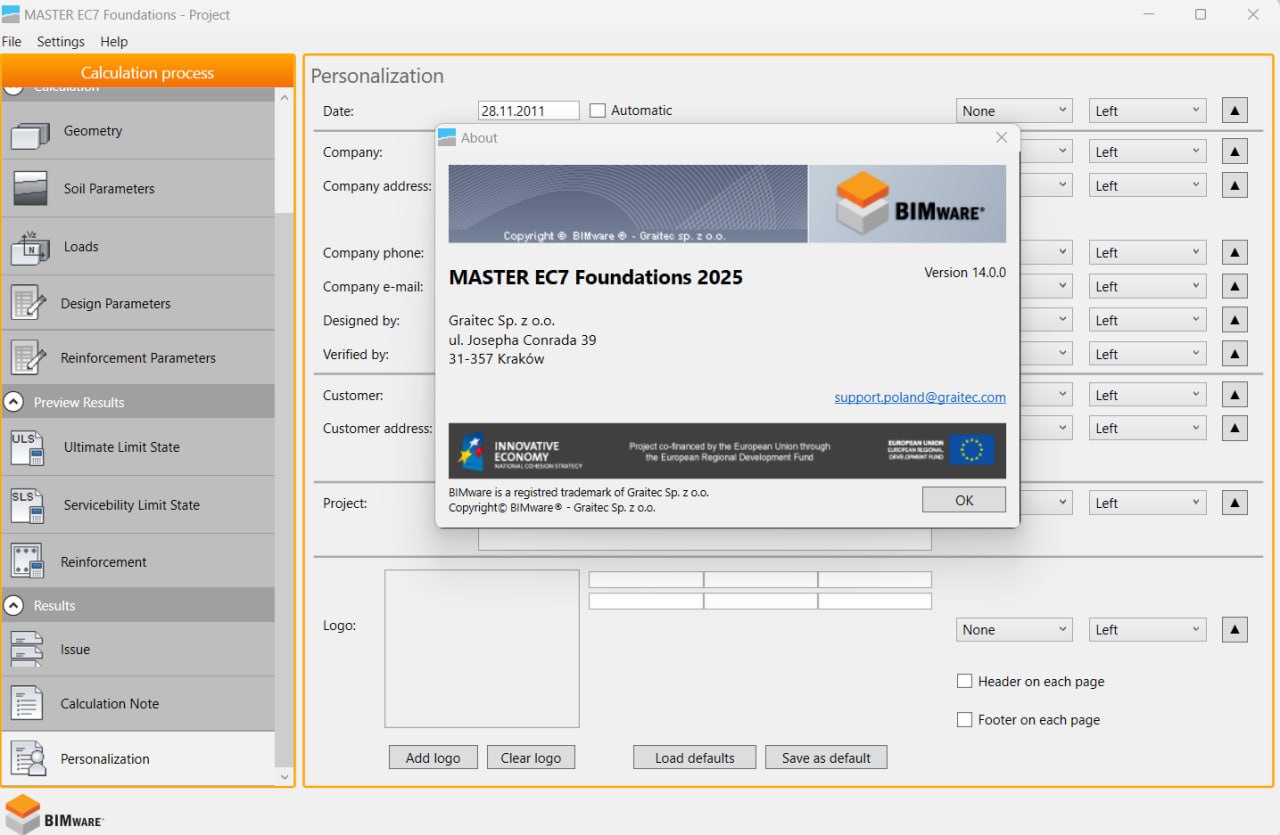
Master EC7 Foundations provides a dynamic view of the foundation geometry, making it easier for engineers to visualise complex designs and quickly make changes. The interface supports structured workflows that guide users through defining loads, soil characteristics, structural elements, and reinforcement parameters, helping reduce errors and improve productivity.
Multilingual and International Documentation
The software is available in multiple languages, including English, French, and Polish, and allows documentation generation in a language different from the interface. This internationalisation makes the tool suitable for global teams and multinational projects, addressing language barriers and helping project collaborators interpret results accurately. The support for various national annexes also means engineers can tailor calculations to local geotechnical practices.
Coordination with Structural Analysis Tools
While EC7 Foundations focuses on foundation and soil analysis, its ability to import force data from structural analysis platforms helps bridge geotechnical design with wider structural workflows. This integration enables engineers to achieve cohesive designs by combining foundation behaviour assessments with overall structural load paths and performance.
Role in Digital Construction Projects
In modern construction projects, digital design tools and Building Information Modelling (BIM) environments are used to coordinate architecture, structure, and geotechnical elements. Tools like MASTER EC7 Foundations fit into these ecosystems by providing precise foundation analysis that can be integrated with BIM models, helping teams reduce design conflicts and improve constructability.
Supporting Complex Construction Projects
Foundations are fundamental to the safety and durability of buildings and infrastructure. It helps engineers design and verify these critical elements with confidence by combining Eurocode‑based calculations with powerful modelling and documentation tools. Its ability to handle layered soil conditions and complex load situations makes it indispensable in modern geotechnical design.
Ensuring Compliance and Professional Engineering Standards
By following Eurocode 7 and supporting national annexes, the software ensures that designs meet recognised engineering standards in multiple jurisdictions. This compliance helps engineering teams produce foundation solutions that satisfy both regulatory requirements and client expectations, contributing to safer and more reliable built environments.
Our Paid Service
If you want to Purchase Cracked Version / KeyGen Activator /License Key
Contact Us on our Telegram ID :
Join Us For Update Telegram Group :
Join Us For Update WhatsApp group:
Crack Software Policies & Rules:
Lifetime Activation, Unlimited PCs/Users,
You Can test through AnyDesk before Buying,
And When You Are Satisfied, Then Buy it.